

Business Blogs
What’s the biggest mistake Florida business owners make when handling unknown risks in a transaction? Assuming escrow is just a formality. In reality, escrow holds are your best defense against hidden liabilities, unresolved claims, and last-minute surprises that can derail a deal. Florida law requires…

Are you selling your Florida business and considering an earnout? Many owners think deferred payments are a win, but the reality is far more complicated. Earnouts tie your payout to future performance—metrics you may not control once the buyer takes over. Sellers often overlook how…
The U.S. Supreme Court’s decision in Montgomery v. Caribe Transport II, LLC is an important warning for the transportation industry. The case does not change how freight is moved. But it may change who gets sued, what evidence gets reviewed, and how risk is assigned…
What happens when a Florida business founder walks away—and takes their full share of equity with them? Too many small businesses skip the vesting conversation, assuming trust will carry the partnership. But when a founder breakup hits, the absence of a vesting schedule can turn…
What happens when your Florida LLC partners can’t agree—and there’s no way forward? Deadlocks aren’t just business headaches; they can fracture friendships and force companies into costly litigation or even dissolution. Many owners assume their operating agreement covers every scenario, but without a deadlock clause,…
Are you sure your business name is truly yours? Many Florida entrepreneurs discover too late that registering a company name, securing a domain, and trademarking a brand are three separate legal moves. The confusion isn’t just academic—it can cost you thousands in legal fees, lost…
Are you considering rewarding a key contributor with ownership for their sweat? In Florida, sweat equity can be a powerful motivator—but it’s also a legal minefield if you don’t structure it right. Too many business owners hand out equity informally, only to face bitter disputes,…

What’s the easiest way to lose your liability shield in Florida? Neglecting corporate minutes. Many business owners assume their LLC or corporation automatically protects their personal assets, but Florida courts look for evidence that your entity operates independently. If you skip keeping corporate minutes, you…
What’s the fastest way to lose control of your Florida business? Enter a dispute without corporate bylaws. Too many owners treat bylaws as an afterthought, only to discover their absence leaves them exposed when partners, directors, or shareholders clash. Florida Statutes § 607.0206 mandates that…
Ever wondered if a creditor could take over your Florida LLC? The answer is more reassuring than most business owners expect. Florida law, specifically Fla. Stat. § 605.0503, makes the charging order the exclusive remedy for creditors seeking to collect from a member’s interest in…
What happens when a member of your Florida LLC becomes a liability? Many business owners assume they can simply vote out a disruptive partner, but Florida law doesn’t make it easy. Without a removal clause in your operating agreement, you may be forced to live…
Ever seen a business partner demand repayment for what you thought was a capital contribution? In Florida, this scenario is all too common—and it’s fueled by confusion over member loans versus capital. The stakes are high: a poorly documented cash infusion can ignite bitter ‘pay…
What’s the most overlooked risk in a Florida multi-member LLC? The voting rights clause. Owners often assume boilerplate language will protect their interests, but Florida’s LLC Act (Fla. Stat. § 605.04071) sets only basic default rules. If your operating agreement doesn’t clearly define who votes…

Think a 50/50 partnership guarantees equal control? In Florida, it’s a legal coin flip that can leave your business stranded. Many owners believe splitting ownership down the middle is the fairest approach, but when partners disagree, the business can grind to a halt. Deadlocks are…
Ever wondered if buying a business in Florida means you’re starting fresh? The reality is, successor liability can turn your acquisition into a legal minefield. Florida law doesn’t always let buyers walk away from a seller’s debts, lawsuits, or regulatory headaches. If you’re not careful,…
What’s the biggest mistake sellers make when exiting a Florida business? Underestimating the power of a non-compete agreement. Unlike employment non-competes, which courts scrutinize for fairness and necessity, business sale non-competes are backed by Florida Statute § 542.335. The law presumes the seller has received…
What’s the real cost of overlooking purchase price allocation in your Florida business sale? More than you think. The way you split the purchase price among assets—goodwill, inventory, equipment, real property—directly affects your tax bill, depreciation, and even your risk of audit. Under Florida law…

Are you considering seller financing for your Florida business sale? Many owners see it as a shortcut to closing, but one overlooked clause can turn your investment into a liability. Florida law is clear: to protect your lender rights, you must secure your interest with…
What’s the real driver behind your business deal’s price? In Florida, it’s the representations and warranties—the ‘promise section’—that sets the tone for negotiation, risk, and value. These are not just formal statements; they’re enforceable promises about the business, assets, and liabilities, governed by statutes like…
Think a ‘non-binding’ Letter of Intent (LOI) is just a formality? Florida courts often look past the label and scrutinize the parties’ conduct and the document’s language. If your LOI contains terms that suggest commitment, or if you act in reliance on it, you could…

Are you about to buy a business in Florida? One overlooked document or missed deadline can turn your investment into a legal headache. Florida law demands buyers verify seller authority, review contracts and leases, and confirm compliance with state filings before closing. Statutes like Fla.…

What happens when your contract doesn’t spell out who’s responsible for customer data? In Florida, the answer can be expensive. Businesses are required by Fla. Stat. § 501.171 to protect personal information and act fast if a breach occurs. But many contracts lack a clear…
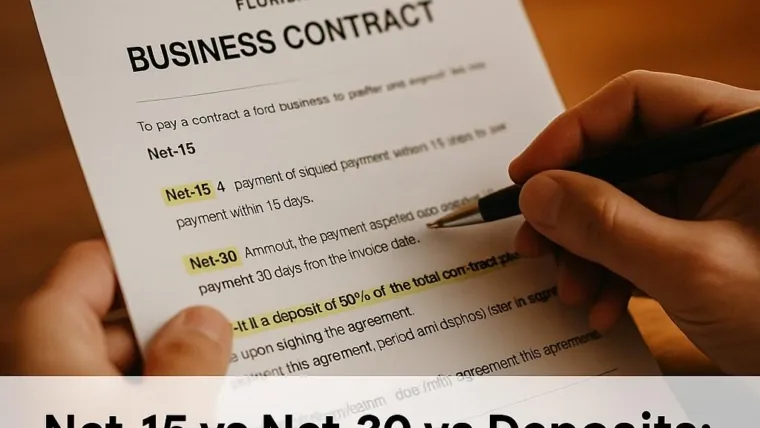
Is your business contract setting you up for cash flow chaos—or legal trouble? Many Florida business owners default to Net-30 payment terms, assuming it’s the industry standard. But Net-15 or requiring deposits can dramatically shift your leverage and risk profile. Under Fla. Stat. § 672.309,…
Ever been blindsided by a contract termination? In Florida, cure periods are your shield against sudden business disruption. A cure period is a contractual window that allows a party to fix a breach before the other party can terminate the agreement. This feature is especially…
Have you ever lost a business dispute because of a missed technicality? In Florida, notice provisions are more than just fine print—they’re the gatekeepers to your rights and remedies. Courts in Florida strictly enforce the language of notice clauses, and one misstep can mean your…
Ever sent a text thinking it changed your business contract? In Florida, that’s a costly misconception. The Entire Agreement Clause is a staple in business contracts, stating that only the written, signed document governs the deal. This clause is designed to prevent parties from later…
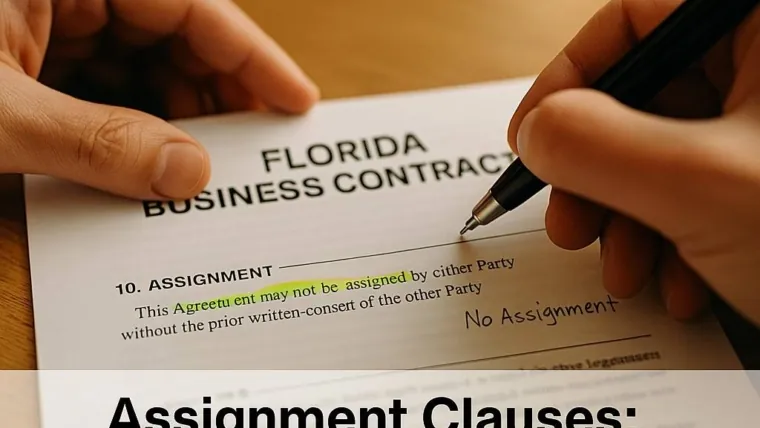
Ever signed a contract thinking you knew exactly who you’d be dealing with? In Florida, assignment clauses can change the game. If your contract doesn’t explicitly block assignment, the other party may have the legal right to transfer their obligations—and your business relationship—to someone else.…

Ever wondered if your contract language is quietly setting your business up for disaster? Warranty disclaimers are a powerful shield—if used correctly. In Florida, the law is clear: vague or hidden disclaimers won’t protect you. Fla. Stat. § 672.316 requires that any limitation or exclusion…

What’s the real cost of a missing limitation of liability clause? For Florida business owners, it could mean facing lawsuits that threaten your company’s survival. Limitation of liability clauses are the seatbelt of your contracts—designed to cap exposure and protect your interests when deals go…
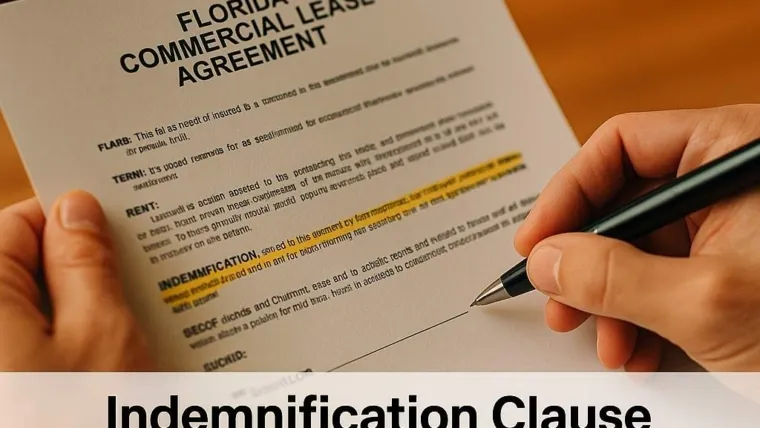
What’s the fastest way for a Florida business to go bankrupt? Signing a contract with an indemnification clause you don’t fully understand. Indemnification provisions are designed to shift risk, but in Florida, they can be a loaded gun pointed at your balance sheet. Under Fla.…
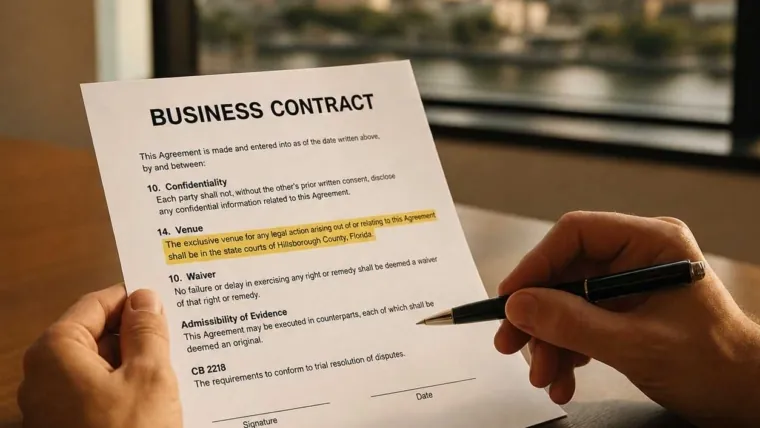
Ever wondered how a single sentence in your contract can decide the fate of your business dispute? In Florida, governing law and venue clauses are not just legal formalities—they’re the battlegrounds for your rights and resources. Many business owners gloss over these sections, only to…
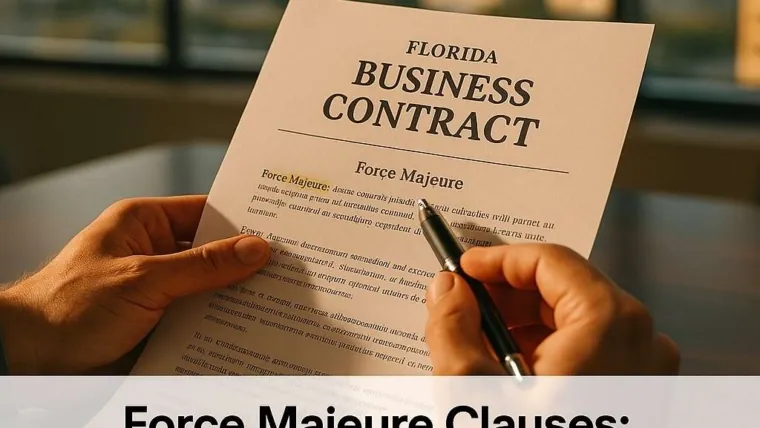
Are you relying on your contract’s force majeure clause to protect your business from the unexpected? Many Florida owners think force majeure is just about hurricanes or floods, but that narrow view leaves your business exposed. In Florida, force majeure can—and should—cover a much broader…
Scope creep is the silent killer of Florida business deals. One vague clause, and suddenly your project is spiraling—extra work, missed deadlines, and mounting costs. The Statement of Work (SOW) clause is your first line of defense. Under Fla. Stat. § 672.201 and § 672.202,…

Ever signed a vendor contract and later discovered your business was locked into another year of payments you never intended? Auto-renewal clauses are a silent trap in Florida vendor agreements, quietly extending obligations unless you act. These provisions can turn a simple subscription into a…
Are you relying on a standard confidentiality clause to protect your business’s most valuable information? That’s a mistake many Florida entrepreneurs make. Under Florida’s Uniform Trade Secrets Act (Fla. Stat. § 688.002), only information that is specifically defined and treated as a ‘trade secret’ receives…
Are you tired of waiting for payments that never arrive? Many Florida business owners lose revenue simply because they don’t enforce late fees or interest in their contracts. The problem isn’t just legal—it’s how you communicate these terms. Fla. Stat. § 687.02 allows you to…
Ever felt trapped in a business contract? In Florida, a Termination for Convenience clause can be your lifeline—if you know how to use it. This provision allows you to end a contract without proving breach or fault, but only when the language is clear and…
Could a single missing clause in your independent contractor agreement expose your business to a lawsuit? In Florida, the answer is yes. Many business owners assume a simple contract is enough, but courts look beyond labels to the actual working relationship. If your agreement lacks…
Ever seen a business implode over a simple paperwork choice? In Florida, the decision between manager-managed and member-managed LLCs is more than a box to check—it’s a legal fork in the road. Owners who gloss over this step often find themselves locked in disputes, facing…
Think your non-compete agreement is bulletproof? Florida courts see right through vague or overreaching contracts. Many business owners are surprised to learn that not every non-compete is enforceable—especially if it doesn’t meet Florida’s strict legal standards. Under Florida Statute § 542.335, a non-compete agreement must…

Are you treating business distributions as just another payday? Florida law draws a sharp line between salary and distributions—and crossing it can cost you dearly. Salary is compensation for your work, subject to payroll taxes, strict reporting, and compliance with employment laws. Distributions, meanwhile, are…
What’s the most common mistake Florida business owners make when drafting their LLC operating agreements? Skipping the capital contributions section. This oversight isn’t just a technicality—it can leave your company exposed when disputes arise or when additional funding is needed. Florida law, specifically Fla. Stat.…
What’s the worst-case scenario for your Florida business? A partner’s sudden departure, divorce, or death can trigger chaos if you don’t have a Buy-Sell Agreement in place. These agreements aren’t just paperwork—they’re your business’s shield against uncertainty and costly litigation. Florida law gives owners the…
How safe is your business shield, really? Many Florida entrepreneurs believe their LLC or corporation is an impenetrable fortress against lawsuits. But the reality is stark: courts can and do pierce the corporate veil, exposing owners to personal liability when the entity is misused. Florida…

Ever wondered if registering a Fictitious Name (DBA) in Florida gives your business legal rights or brand protection? Many owners make this mistake—and pay the price. Under Florida Statutes § 865.09, a DBA is simply a registration with the state, not a legal entity. It…

Ever signed a business loan or lease thinking your personal assets were safe? In Florida, that assumption can cost you everything. Personal guarantees are a common requirement for business owners seeking credit, leases, or vendor accounts. But one overlooked clause can turn a business default…

Are you relying on a non-compete agreement to protect your Florida business, when a non-solicit might be the real solution? Many owners and entrepreneurs confuse these tools, risking contracts that won’t hold up in court—or worse, leaving their business exposed to poaching and competition. Florida…

Is your Florida LLC built on trust alone? That’s a mistake many business owners regret. When partners rely on handshake deals and verbal promises, they’re ignoring the hard reality: Florida law doesn’t recognize trust as a substitute for a written Operating Agreement. Courts enforce statutes,…
What’s the most overlooked sentence in Florida business contracts? The prevailing party attorney’s fees clause. This single line can shift the entire balance of power in negotiations and litigation. Without it, each party typically pays their own legal costs, even if they win. With it,…

Are you relying on your registered agent to handle your business compliance? That’s a mistake many Florida business owners make—and it can cost you. Under Florida law, every corporation and LLC must designate a registered agent, but their role is strictly defined by statute. Florida…