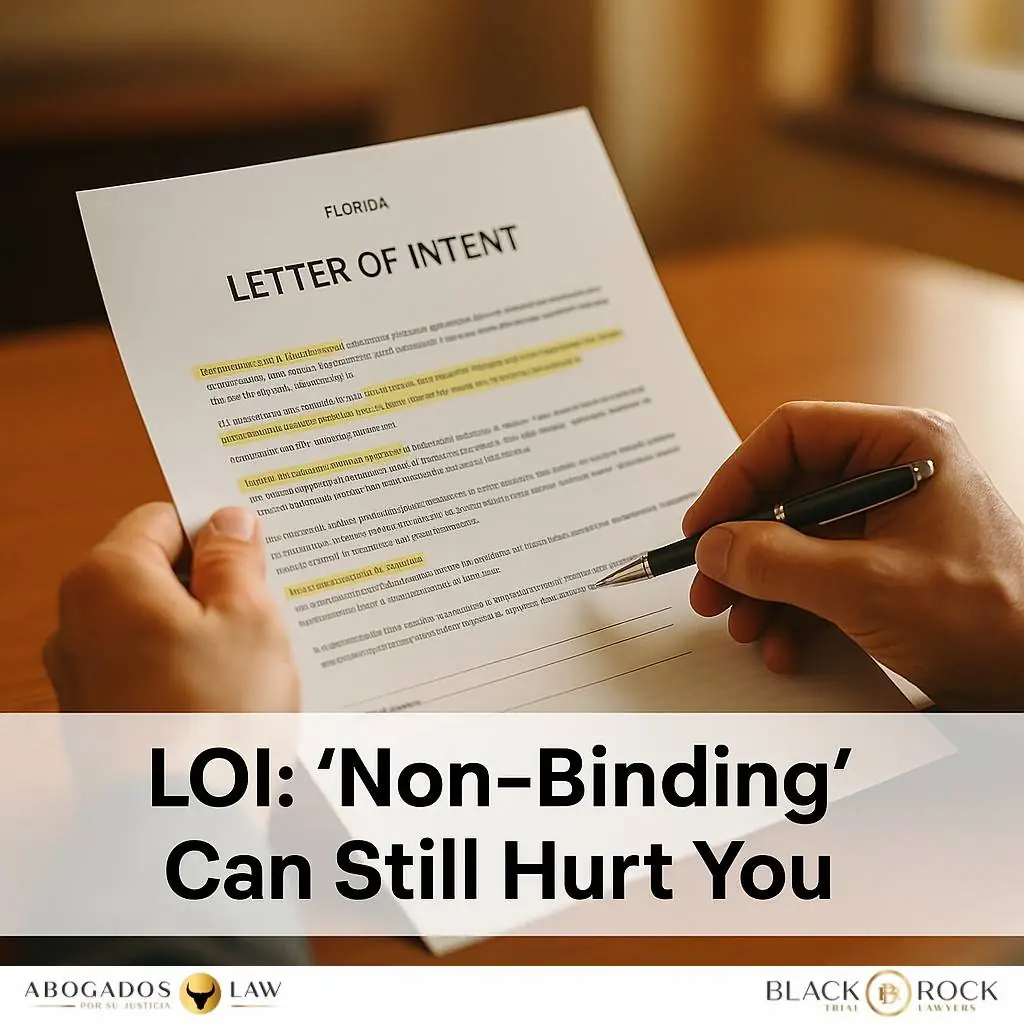
Think a ‘non-binding’ Letter of Intent (LOI) is just a formality? Florida courts often look past the label and scrutinize the parties’ conduct and the document’s language. If your LOI contains terms that suggest commitment, or if you act in reliance on it, you could face claims for breach, promissory estoppel, or damages—even if the LOI says ‘non-binding.’
Florida Statute § 542.335 governs the enforceability of restrictive covenants, and Florida Statute § 95.11 sets the deadlines for contract-related claims. Courts may enforce parts of an LOI if they find evidence of reliance or partial performance. For business owners, this means that a poorly drafted LOI can become a costly mistake, especially if negotiations break down or one party acts on the LOI’s terms.
To protect your business, review every clause in your LOI and document your intent clearly. Avoid ambiguous language and ensure all parties understand which provisions are binding and which are not. Consult a Florida business attorney before signing any LOI to avoid unintended legal consequences. Deadlines for claims can be as short as four years under § 95.11, so act quickly if a dispute arises.
☎️ Schedule a Legal Consult
📲 Call/Text 24/7: 813-254-1777
🌎 businesslaw.blackrocklaw.com
Disclaimer: This content is for informational purposes only and does not constitute legal advice, and laws and legal interpretations may change after the date of publication.
Written by:
Gil Sánchez, Esq.
CEO | Civil Trial Attorney
Black Rock Trial Lawyers
Abogados Law